< GENOME INVADERS >
We study transposable elements — virus-like genetic parasites that comprise over half the human genome. Using computational and experimental approaches, we investigate how these “genome invaders” have shaped immune gene regulation, generated novel protein isoforms, and become dysregulated in cancer.
BioFrontiers Institute & Dept. of MCDB
University of Colorado Boulder
Three levels of transposon biology — from genome-wide co-option to disease dysregulation.
Transposable elements carry ancestral viral regulatory sequences — transcription factor binding sites — that the host genome repurposes as enhancers, promoters, and insulators. We discovered that endogenous retroviruses (ERVs) were co-opted as interferon-inducible enhancers regulating innate immune genes like AIM2 and APOL1. This is not limited to primates: we've shown parallel co-option of LINE-2 elements in cattle and B2 SINEs in mice, revealing a general evolutionary mechanism across mammals.
Intronic transposable elements can be spliced into host mRNAs as non-canonical exons — a process called exonization. We discovered that an Alu element creates a truncated "decoy" isoform of the interferon receptor IFNAR2. This primate-specific isoform (IFNAR2-S) is secreted, binds IFN-β with high affinity, and suppresses interferon signaling — acting as a dominant-negative regulator. We're now using long-read transcriptomics to systematically discover TE-derived isoforms across immune genes.
Transposable elements that are normally silenced can become reactivated in cancer, creating aberrant enhancers and splice variants. We showed that LTR10 endogenous retroviruses are reactivated as cancer-specific enhancers in colorectal cancer, driven by MAPK/AP-1 signaling. These TE enhancers regulate cancer-relevant genes and can be inhibited by MEK inhibitors, suggesting they are potential therapeutic targets. We're also investigating how IFNAR2 splicing dysregulation in ovarian cancer affects immunotherapy response.
The Chuong lab is dedicated to promoting an inclusive and welcoming environment for scientists from all backgrounds.
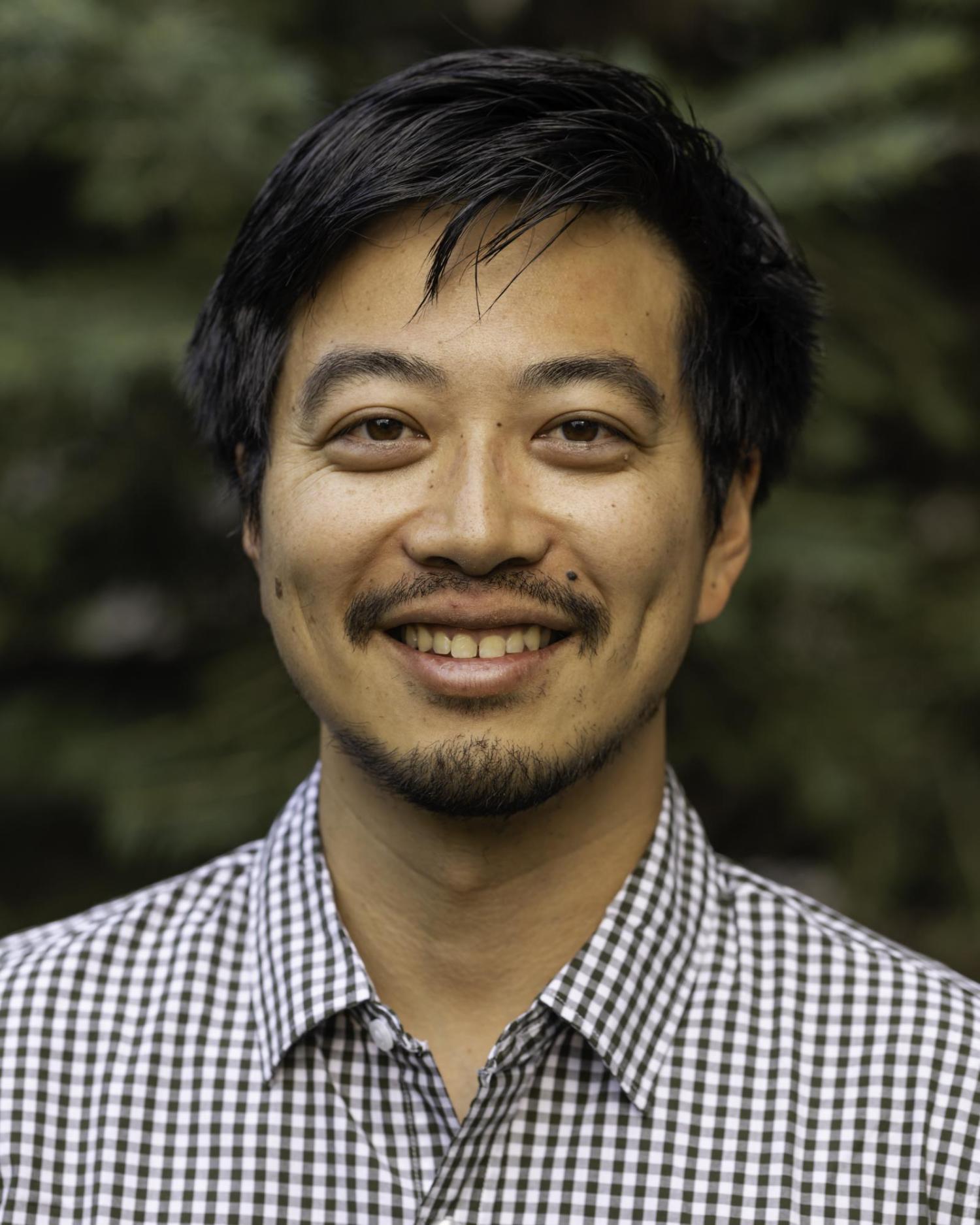
Associate Professor, MCDB & BioFrontiers
TE-derived isoforms & IFN signaling

Genome editing

Computational genomics & TE biology

TE regulatory switches in cancer

Immune epigenetics

Novel TE-derived receptor isoforms

TE-containing splice isoforms

Chromatin-mediated disease

TEs in neurodegenerative disease

MCDB
JOIN THE TEAM?
Ed accepts PhD students through MCDB, BCHM, or IQ Biology programs. Inquiries about technician or postdoctoral positions: edward.chuong@colorado.edu
Selected papers from the lab.
We are grateful for support from these agencies.
NCI R21
2026–2028CCXDP Grant
2026–2028Lloyd J. Old STAR Award
2025–2030CDMRP (Co-PI with Dr. Benjamin Bitler)
2025–2029NIGMS R35 MIRA
2018–2029Packard Fellowship for Science & Engineering
2020–2025Discovery Boost Grant
2024–2025Marvin H. Caruthers Endowed Chair
2018–2021Research Fellowship
2019–2021Webb-Waring Biomedical Research Award
2018–2021Lab receives grant from the Collaborative Center for XDP Research (CCXDP)!
Nicholas Patty (IQ Bio/MCDB) joins the lab. Welcome!
Ed gives invited talks at Clemson University and Jackson Lab Long Read Workshop.
Ed presents at AAI meeting (Boston).
Ed gives seminar at University of Utah Dept. of Human Genetics.
Ed gives invited talk at U. Miami Cancer Center symposium.
Atma and Holly publish honey bee genome paper in G3.
Holly co-authors ball python genome paper in G3. Ed gives seminar at UC Irvine.
Lynn Sanford and Mia Chaw join the lab. Welcome!
Carolina receives NIH T32 Data Science training grant.
New paper in collaboration with Russell Vance’s lab (Berkeley) in Nature on the SP140–RESIST pathway! Ed receives the Cancer Research Institute Lloyd J. Old STAR Award ($1.25M).
Ed gives invited talks: EMBO Mobile Genomes (Heidelberg, Apr), Genetics Society UK (Belfast, Apr), GRC Molecular Mechanisms in Evolution (Jun).
Edward Chuong, PhD
Associate Professor
MCDB & BioFrontiers Institute
University of Colorado Boulder
EMAIL edward.chuong@colorado.edu
BLUESKY @edchuong.bsky.social
OFFICE JSCBB (BioFrontiers), University of Colorado Boulder